



Identity tampering and contract manipulation

Fraudulent invoices
and overbilling

Fake contracts and
supporting docs
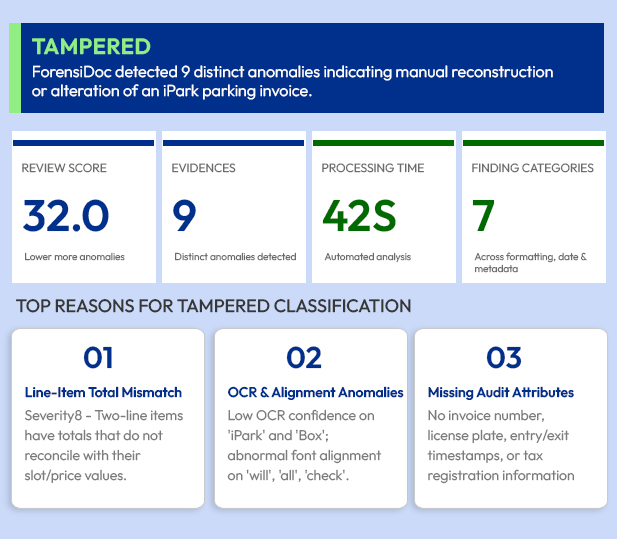 Take control of your document verification process by flagging structural inconsistencies, unauthorized modifications, and digital manipulations
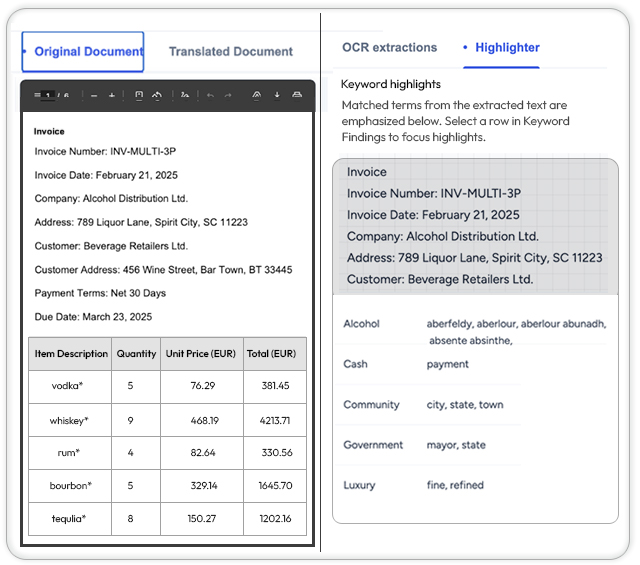 Validate document authenticity by identifying API validation failures, external registry mismatches, and duplication across images, pages, and other documents.
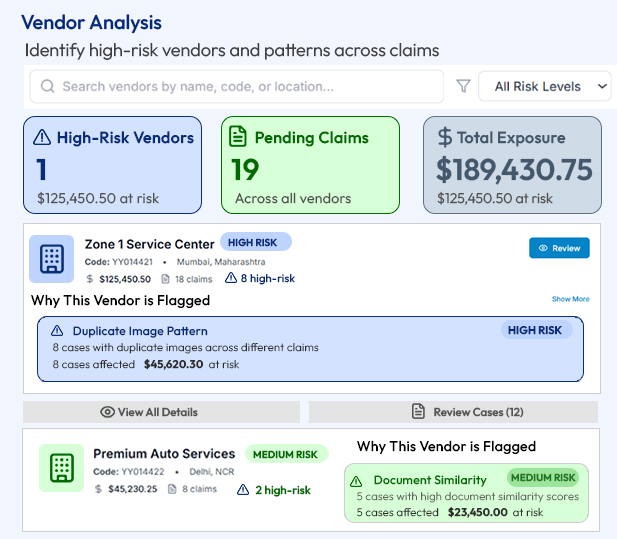 Leverage external risk intelligence from OpenSanctions, LexisNexis, and internal transaction systems to uncover suspicious patterns of risk or misconduct across vendor relationships.
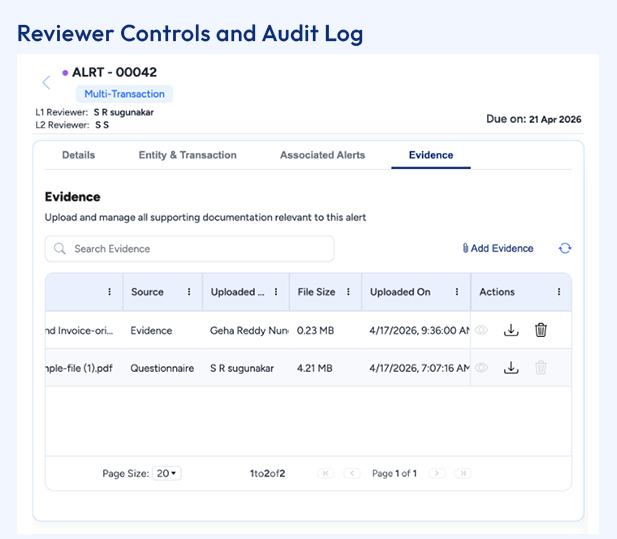 Access full audit trail from document creation to final approval. Reject, escalate, or request more information on flagged documents and reduce false positives.


Flexible Data Integration:
Works with any ERP or legacy system
Works with any ERP or legacy system

External Risk Intelligence:
Enhance risk classification, using emerging information from OpenSanctions, LexisNexis, and internal transaction systems
Enhance risk classification, using emerging information from OpenSanctions, LexisNexis, and internal transaction systems

Robust Assessment Library:
Hundreds of algorithms, pre-built and mapped to specific fraud schemes and policy controls
Hundreds of algorithms, pre-built and mapped to specific fraud schemes and policy controls

Expertise:
Leverage 25+ years of proven anti-fraud analytics expertise
Leverage 25+ years of proven anti-fraud analytics expertise

Integrated Case Management:
Streamline reviews with fully auditable workflows that simplify documentation and reporting
Streamline reviews with fully auditable workflows that simplify documentation and reporting

Transparent Fee Structure:
Provide multi-user access, unlimited reporting, and comprehensive data sources within a predictable pricing model
Provide multi-user access, unlimited reporting, and comprehensive data sources within a predictable pricing model